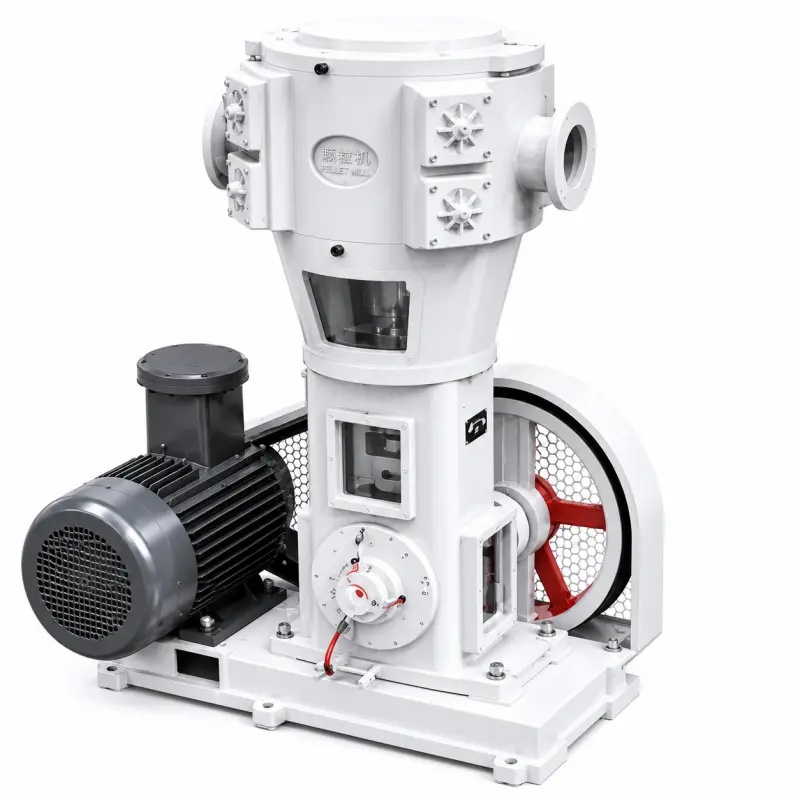
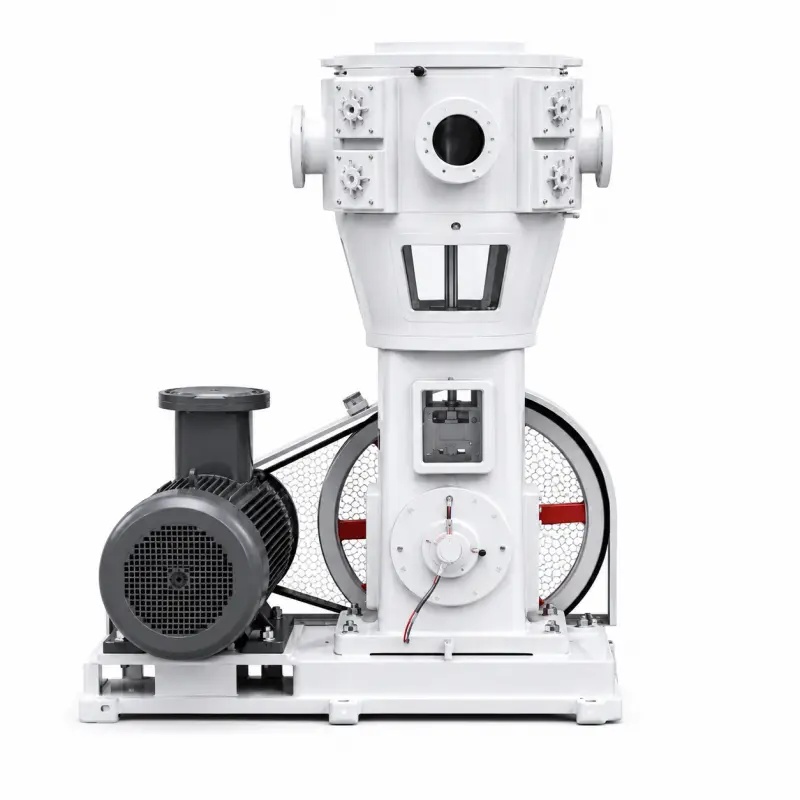
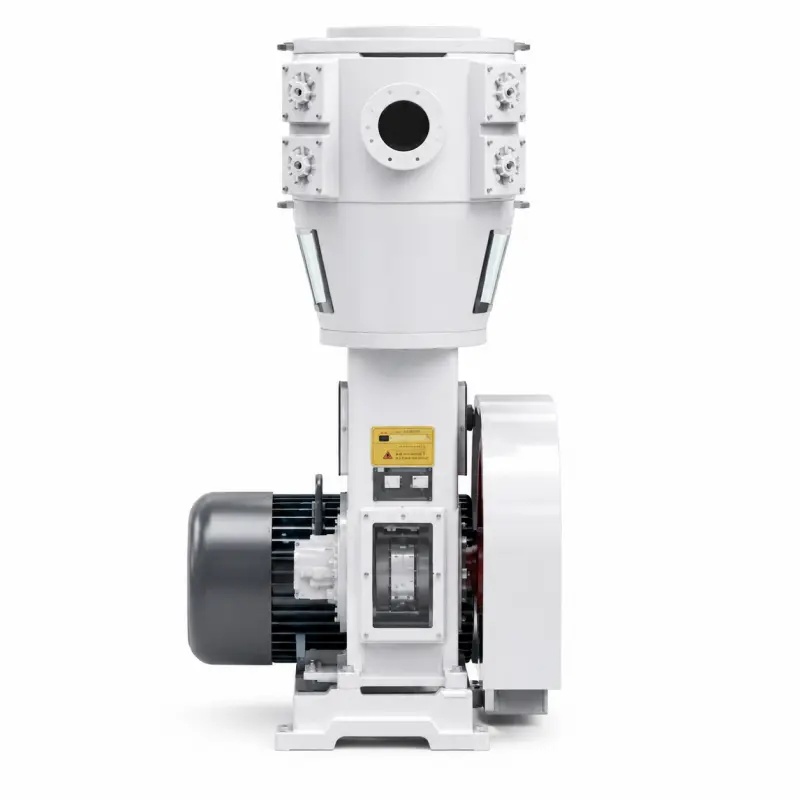
The oil-free vertical vacuum pump operates based on a reciprocating piston mechanism, with key functional components and principles detailed below:
1. Mechanical Transmission System:The motor drives a crank-slider mechanism via a V-belt, converting rotary motion into reciprocating linear motion. The crosshead slider transmits this motion to the piston through a piston rod.
2. Suction & Discharge System:The piston, fitted with gas-sealing F4 piston rings, reciprocates inside the cylinder to create periodic expansion and compression of gas volume. Axially arranged inlet and exhaust valves enable controlled gas intake and discharge cycles.
3. Auxiliary Functional Components:
Lubrication: The crankcase oil lubricates moving parts via splash or forced feed.
Cooling: 0.2 bar cooling water removes heat generated by gas compression.
Self-lubrication: F4 self-lubricating piston rings eliminate the need for additional cylinder lubrication, ensuring oil-free operation.
4. Stuffing Box Sealing
Two sealing configurations are available:
Standard Type: Equipped with PTFE or rubber oil seals for general applications.
Specialized Type: Designed for hazardous gases (e.g., CO, natural gas, methane). Nitrogen at controlled pressure and flow is injected, mixed with leaked gas after throttling, and safely discharged outside the system. This prevents hazardous gas leakage and air contamination of process media.
5. Baffle Chamber Design
A dedicated baffle chamber isolates the process gas path from the lubricated crankcase. This prevents oil contamination and ensures an absolutely oil-free vacuum system, making it ideal for corrosive media, oil-sensitive processes, and high-purity tail gas recovery applications.

|
 0086 18638712391
 kai@zzyfmc.com


