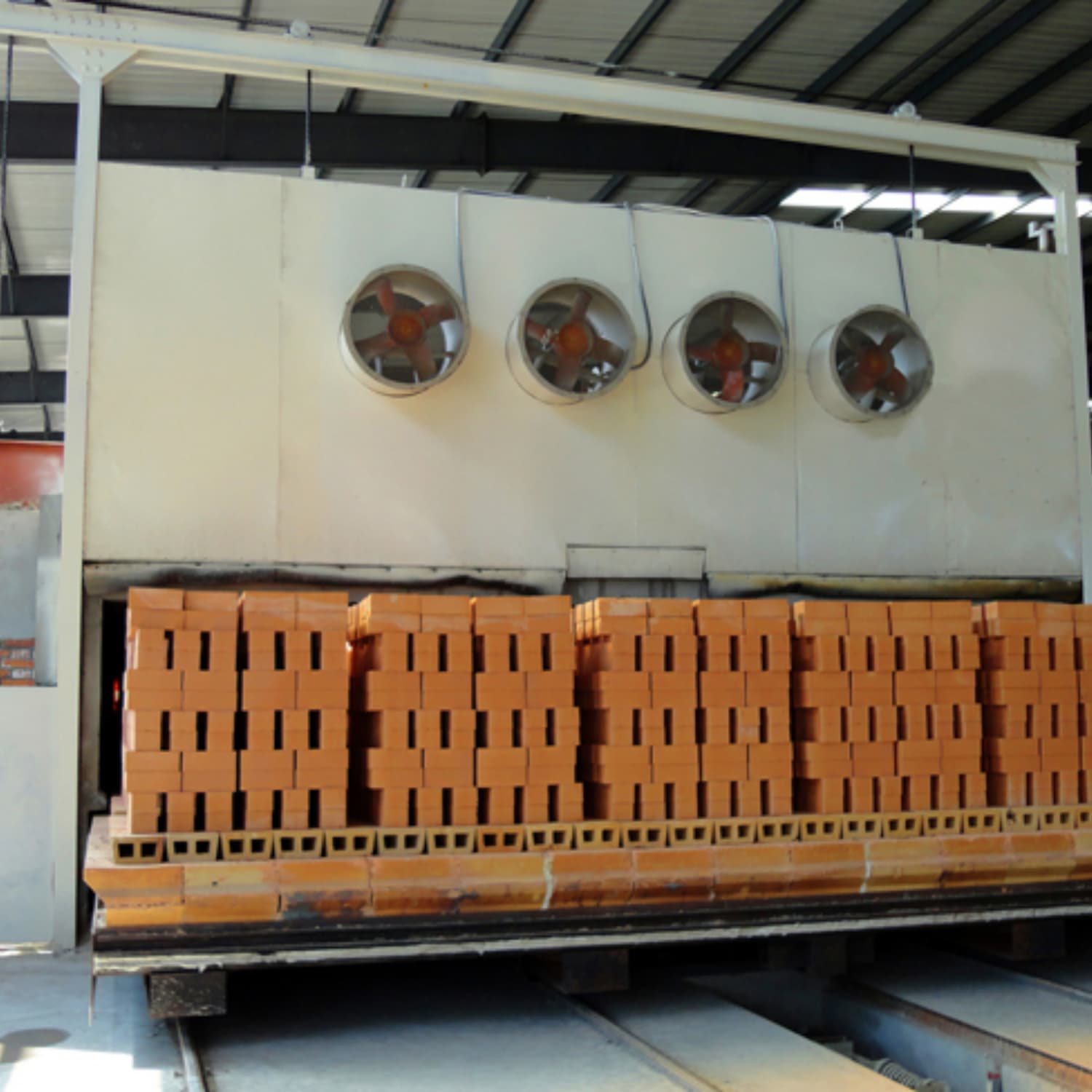
Tunnel kiln thermal system and mechanical structure determine the overall firing stability of clay bricks. Most recurring clay brick stack collapse is not caused by raw material problems, but by unreasonable temperature adjustment, poor moisture exhaust performance and neglected kiln equipment maintenance. Comprehensive debugging of each production section helps factories eliminate hidden collapse risks.
1. Pre-kiln green brick foundation guarantee Equipment operation matches qualified green bricks. High residual moisture, insufficient raw material aging and low extrusion pressure lead to fragile green bricks. Before entering the kiln, clay brick moisture must be controlled below 6%, with 3-day material aging and standard forming parameters to adapt to subsequent high-temperature firing and ventilation changes.
2. Kiln car stacking stability matching Kiln car operation stability cooperates with scientific stacking. Irregular stacking causes uneven stress during kiln car traveling. Overly dense stacking blocks the ventilation channel of tunnel kilns. Standard gaps and dry-bottom & wet-top stacking mode effectively improve the overall stability of brick stacks during equipment operation.
3. Preheating zone temperature and ventilation debugging (core link) As the highest-risk section for collapse, the preheating zone requires strict thermal parameter control. The heating rate shall remain at 6-8°C/h, and the air supply temperature shall not exceed 116°C. Manufacturers need to calibrate exhaust fan frequency regularly to ensure sufficient air volume and air pressure. Sealing maintenance of kiln inlet prevents cold air invasion and moisture condensation.
4. Firing zone thermal parameter calibration Stable firing temperature avoids brick softening and melting. Excessive internal combustion leads to local overheating. Timely parameter adjustment according to fire hole observation data prevents large-area deformation and collapse of stacked bricks.
5. Tunnel kiln mechanical structure maintenance Kiln track deformation, arch structure settlement and blocked air outlets directly affect the smooth operation of kiln cars and kiln internal airflow. Regular equipment overhaul eliminates mechanical jitter and airflow disorder-induced brick collapse failures.
Professional thermal system debugging and periodic equipment maintenance are the core foundations for long-term stable operation of tunnel kilns, effectively reducing clay brick collapse failures.
|
 0086 18638712391
 kai@zzyfmc.com


