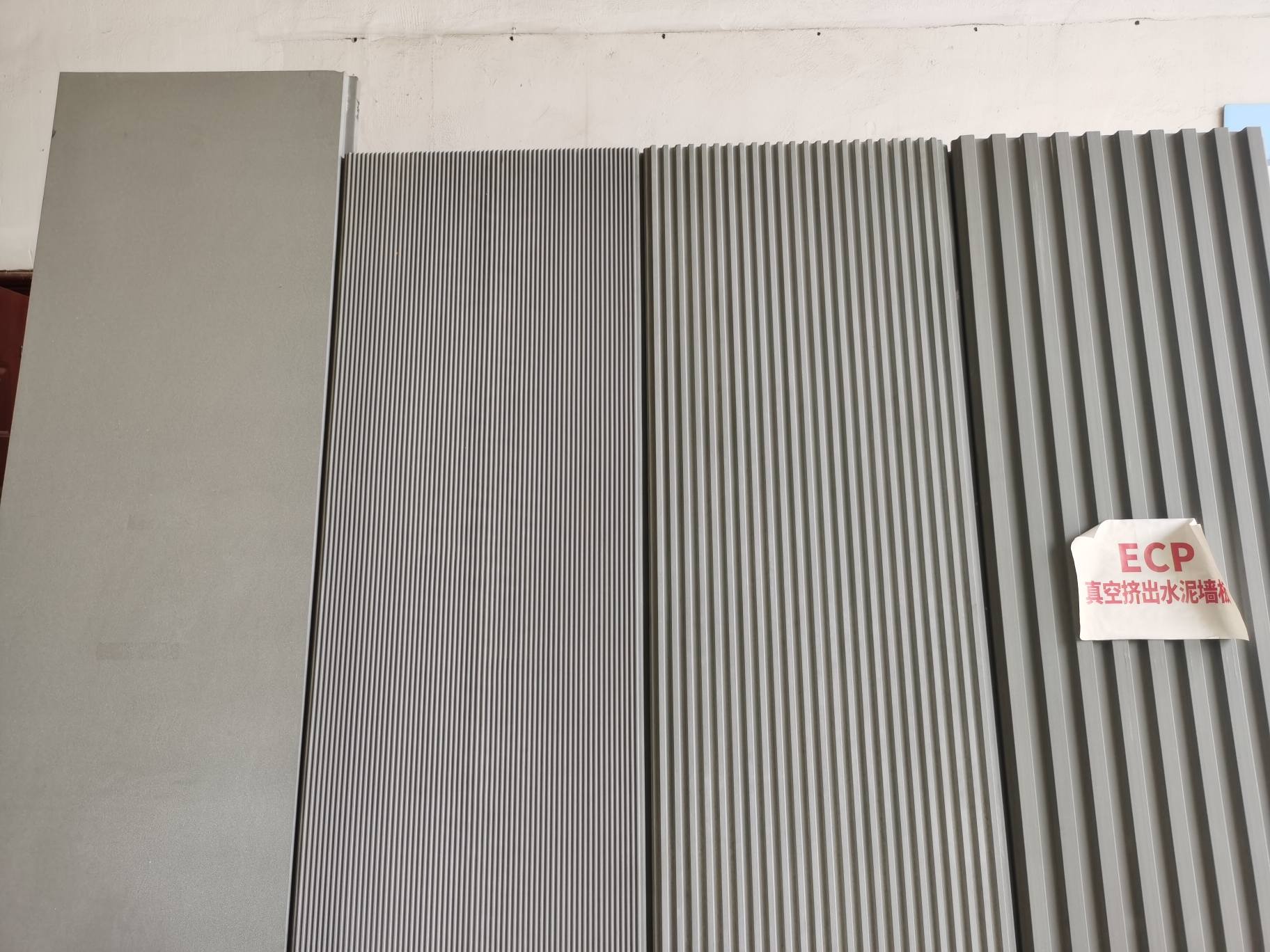
Extruded Cement Panel (ECP) is an innovative extruded panel material. Its primary raw materials include cement, fibers, solid waste, and siliceous materials, with some manufacturers incorporating industrial by-products such as stone powder, construction waste, phosphogypsum, and tailings. These eco-friendly materials ensure high resource efficiency. The production process involves vacuum high-pressure extrusion and steam curing, resulting in panels with dense structures, stable performance, and precise dimensions. This manufacturing method enables versatile surface designs.
-
Lightweight yet High-Strength: Despite its low density, this lightweight material achieves a compressive strength of 60MPa, with hollow panels exceeding 12MPa and average bending strength over 10MPa when fully saturated. This design effectively reduces structural weight while meeting load-bearing requirements.
-
Exceptional Fire Resistance: As a non-combustible material, it demonstrates outstanding fire safety. The 60mm-thick ECP extruded wall panel maintains a fire resistance limit of 1.00 hours, effectively delaying fire spread to buy critical time for evacuation and firefighting.
-
Superior Sound Insulation: The 60mm ECP panel provides 32dB sound insulation, creating quiet and comfortable indoor environments. Ideal for high-acoustics applications like residences, schools, and hospitals.
-
Weather-Resistant Performance: With low water absorption, it resists rain and moisture damage while demonstrating strong freeze-thaw cycle endurance. After 100 freeze-thaw cycles, its performance remains stable, ensuring long service life in diverse climatic conditions.

Technical advantages:
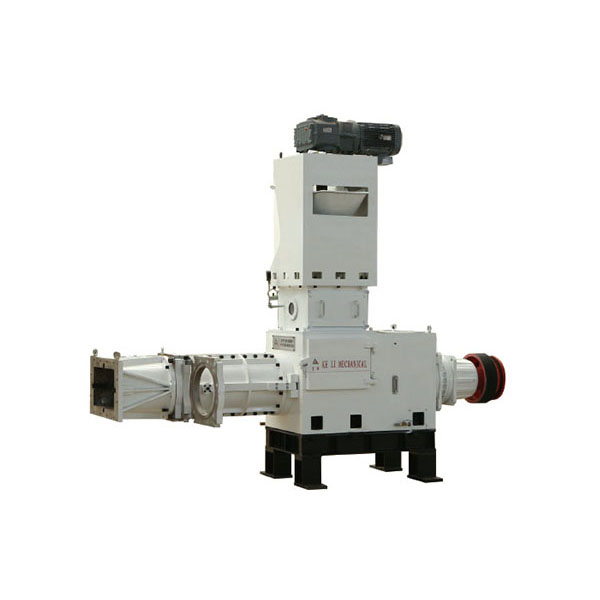
1. The double-helix design
increases extrusion pressure by 30% compared with single-helix, suitable
for high-hardness materials (such as shale and gangue mixed with clay).
2.
The vacuum degree is stable and controllable, the porosity of brick
blanks is reduced, and the thermal conductivity after sintering can be
decreased by 15%-20%, meeting the standards of energy-saving bricks.
Economic advantages:
1.
High degree of automation, reducing operators by more than 60% and
lowering labor costs (compared with traditional manual extrusion).
2.
Significantly improved production capacity, with unit energy
consumption (kWh/10,000 bricks) reduced by 12%-18% compared with
traditional equipment.
Maintenance advantages:
1.
The screw shaft is coated with wear-resistant alloy (such as tungsten
carbide), with a service life of 8,000-10,000 hours and convenient
replacement.
2. The vacuum system is equipped with an automatic dust
removal device to reduce dust blockage, extending the maintenance cycle
to 3,000 hours per time.
|
 0086 18638712391
 kai@zzyfmc.com


