Equipment Introduction:
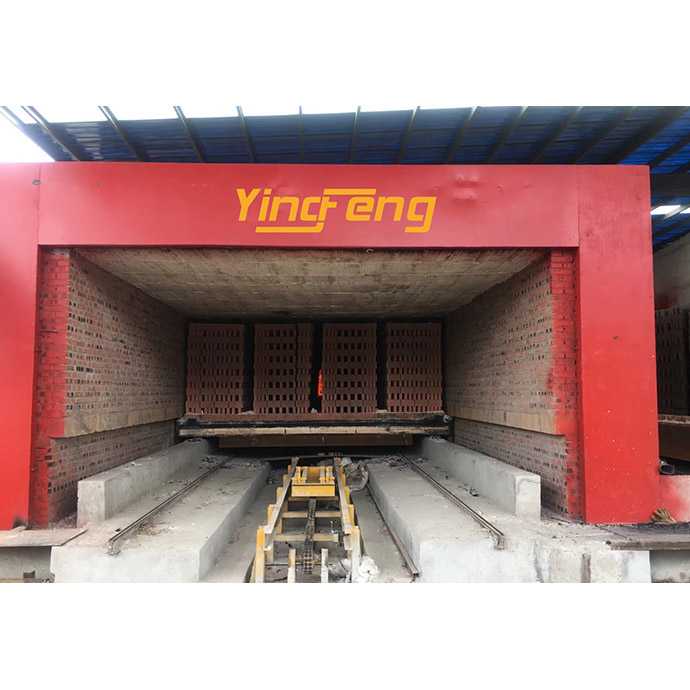
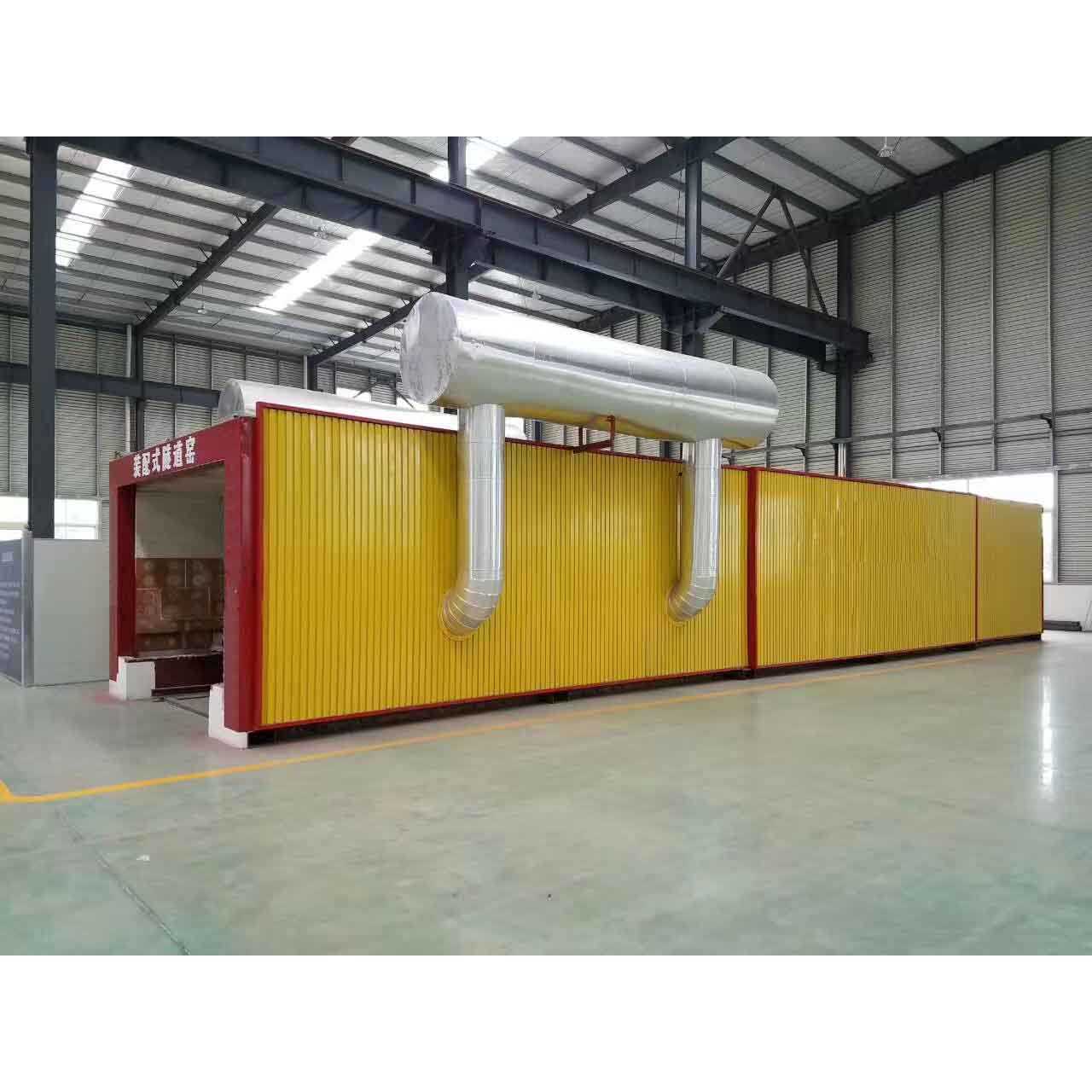
A tunnel kiln is a continuous firing device widely used in the ceramics,
brick, and glass industries. It is named for its unique elongated
structure and continuous production method.
The design of a tunnel
kiln allows green bricks or other ceramic products to move slowly
through the kiln, passing through different temperature zones to
complete the firing process.
Typically the cross section width is
2.5m, 3.6m, 4.8m, 6.9m, 9m. The top generally adopts masonry type
suspended roof with refractory bricks and splicing type hanging
structure with aluminum silicate fiber modules. The length of kiln cart
is matched according to the product

Structure of Tunnel Kilns:
1. A tunnel kiln typically consists of the following main parts:
(1)
The main structural part of the tunnel kiln, usually an elongated
passage with tracks or rollers inside to support and move the green
bricks.
(2) The first zone that the green bricks enter after entering
the kiln body, where the temperature gradually increases to remove
moisture from the bricks.
2. Firing Zone: The core area of the tunnel kiln, with the highest temperature, where the bricks are sintered.
3. Cooling Zone: The zone where the fired bricks are cooled down gradually to a temperature suitable for unloading.
4.
Combustion System: Provides the heat required for firing, usually
including burners, fuel supply systems, and exhaust systems.
5. Ventilation System: Controls the airflow inside the kiln to ensure complete combustion and uniform temperature distribution.
6.
Drive System: Used to move the green bricks through the kiln, usually
including motors, chain drives, or roller drive devices.
Working Principle of Tunnel Kilns:
1. The working principle of a tunnel kiln is based on a continuous production mode.
2. Green bricks are placed on kiln cars, which enter the kiln body via tracks or rollers.
3.
The green bricks are gradually heated in the preheating zone to remove
excess moisture, and the exhaust gases from the kiln can be recirculated
to improve thermal efficiency.
4. The green bricks reach the highest temperature in the firing zone and complete the sintering process.
5. The fired bricks are gradually cooled in the cooling zone to a temperature suitable for unloading.
6.
Kiln cars move continuously through the kiln, with new green bricks
entering and fired bricks being unloaded, achieving continuous
production.
Maintenance and Care of Tunnel Kilns:
To ensure the efficient operation and long service life of tunnel kilns, regular maintenance and care are necessary:
1. Regularly inspect the kiln body for cracks, deformations, or other damage, and repair them in a timely manner.
2. Clean the combustion system regularly, including burners and fuel supply systems, to ensure complete combustion.
3. Ensure that the ventilation ducts are unobstructed and check the normal operation of fans.
4.
Inspect the operation of the drive system, including motors, chains, or
roller drives, and lubricate and replace worn parts in a timely manner.
5. Regularly calibrate temperature sensors and control systems to ensure accurate temperature control.
Applications of Tunnel Kilns:
Tunnel kilns are widely used in the following fields:
1. Ceramics industry: For firing ceramic products such as tiles and sanitary ware.
2. Brick and tile industry: For firing clay bricks, cement bricks, etc.
3. Glass industry: For firing and annealing glass products.
4. Refractory materials industry: For firing refractory bricks and other refractory materials.
 0086 18638712391
 kai@zzyfmc.com


